


Pastoral
Wellbeing is at the heart of everything we do at Claremont. We value the mental and physical wellbeing of every member of our school community and we believe that it is only when their pastoral needs are met, that children can access the quality-first teaching that the staff provide.
There are a number of ways we support pupils in the school. We use positive reinforcement to help pupils make good behaviour choices. Please see our CLA Positive Behaviour Policy Summer 2026 for more details. Through our curriculum, we ensure our lessons are engaging and inspiring and promote mental health and wellbeing through our PSHE curriculum. Please see the Claremont Primary School - Creative Curriculum for these long-term plans.
Every week, we provide whole-school, class-based and phase assemblies which focus on our school values and allow time for children to think about and reflect on their own contribution to life at Claremont.
Physical activity is so important to mental health and wellbeing and, as a result, we use our wonderful grounds to support learning as much as we can, specifically with active Maths and English lessons, the Mile Run and two PE lessons each week.
There is a House System at Claremont, which supports pupils to work as part of a team. Children are allocated a house in Reception (or when they join the school, if later) and stay in this house for the duration of their time here. Younger siblings are allocated to the same house as older siblings. Houses are as follows:
- Dragons (red)
- Eagles (green)
- Lions (yellow)
- Unicorns (blue)
Children participate in house activities throughout the school year, including school sporting activities. House points are awarded for good behaviour and accumulate, with houses winning treats for earning the most points. Staff members are also allocated houses and support the children on Sports Day. Year 6 children can stand for House Captain in an election process which takes place in Term 1.
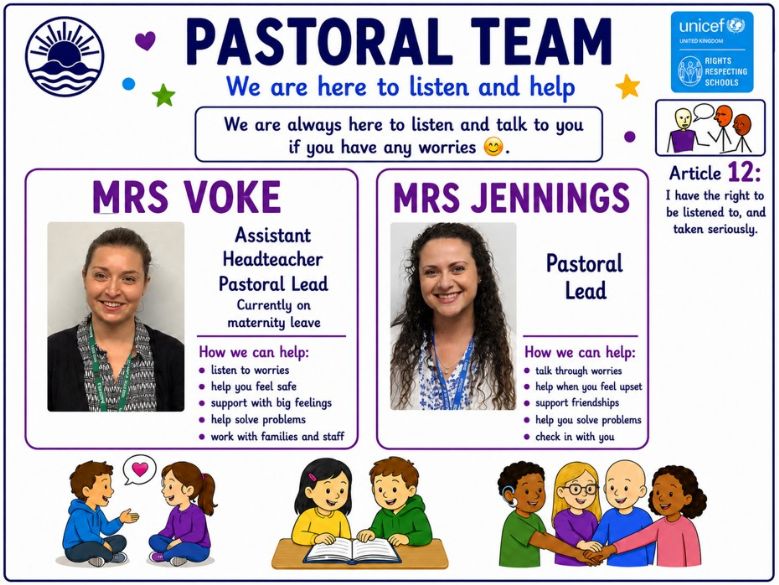
There are two Pastoral Leaders who work across the school whose role is to support the wellbeing and behaviour of the pupils at Claremont. As a parent, if you have any concerns, you can contact them via the office (please see the image below for further details on our Pastoral Team).
Working alongside our Pastoral Team are a team of Mental Health First Aiders, who are trained to support children when they are finding a situation challenging. Within classrooms, the children have access to a worry box, where they can put their name or a message for the adults in their class if they have a concern they would like to talk to someone about.
At playtimes, we know that children may need more support as they learn the skills of building friendships and communication with others. For this reason, we provide a lunchtime ‘Haven’, where children in KS1 and KS2 are able to go to talk to an adult or spend time inside in a calm and peaceful environment. There is a maximum of 10 children to access each session, and this may include children who have been directed there by the pastoral team.
Children in Year 6 are also given the opportunity to train as Playground Buddies, where they work in small teams to provide support for all children in Reception and KS1 during their break-times. The buddies wear a hi-vis vest and will actively engage with the younger children in playing games or helping them build relationships with the peers. The buddies are wonderful role-models to our youngest pupils and we are fortunate to have such caring and responsible members of Year 6.
Wellbeing Ambassadors are a small group of children across Years 4, 5 and 6 who have a very specific role in supporting individual children in Reception and KS1 in a more nurturing way. The younger children have been identified as children who may need help in making friends or who may find lunchtimes more difficult to navigate. The Wellbeing Ambassadors are a point of contact for the younger child in knowing that there is an older child who will help them in their play or sit and talk quietly about their day if they would prefer. Parents are informed if their child has been assigned a Wellbeing Ambassador and this is reviewed on a termly basis.
All Playground Buddies and Wellbeing Ambassadors are provided with specific training from experienced staff and are regularly monitored to support with any issues that may arise.
Our aim at Claremont is to prepare our children to become the best person they can be and leave Claremont at the end of Year 6 with kindness, confidence and self-belief.
Supporting emotional regulation through ......

The Zones of Regulation is a research-based framework that helps children develop emotional literacy, self-regulation and a range of coping strategies. It gives pupils a shared language to talk about how they are feeling and helps them understand what they can do to support themselves when emotions feel big or difficult.
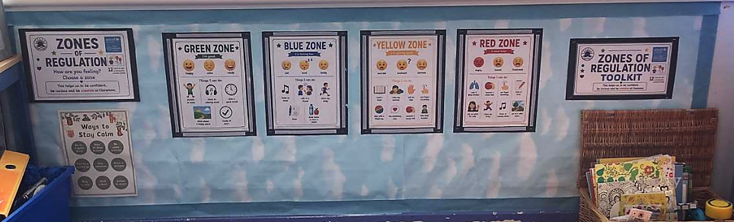
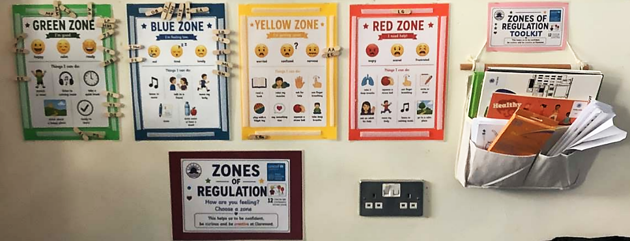
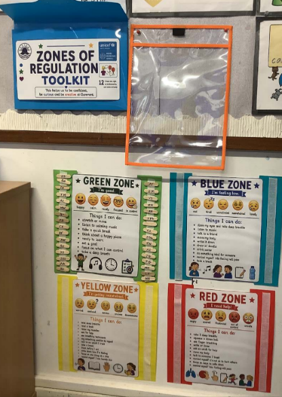
Following feedback and ideas from our pupils and staff, we have refreshed the look of our Zones of Regulation and relaunched its use across every classroom. Here are some examples:
Our pupils are encouraged at different points throughout the day to:
- Recognise and identify how they are feeling.
- Talk about their emotions using the Zones language.
- Explore different strategies that can help them feel regulated and ready to learn.
- Develop an understanding of which strategies work best for them.
Each class has its own regulation toolkit, containing a range of resources such as colouring activities, sensory toys, books, timers and other calming or regulating strategies. These are available to support pupils when they need them.
Our adults play an important role too. They work hard to notice and acknowledge children's emotions, normalise their feelings, help them choose an appropriate strategy and support them to reflect on whether that strategy has helped.
Importantly, there is no 'good' or 'bad' Zone. All emotions are valid, and children can move between different Zones throughout the day. The aim is not to keep children in one particular Zone, but to help them recognise how they are feeling and develop strategies that enable them to manage their emotions and engage successfully in learning and relationships.
How can parents and carers support at home?
You may begin to hear your child using the Zones language at home. You can support this by being curious about their feelings and talking together about strategies that help them to regulate.
For example, you might ask:
- “Which Zone are you feeling in right now?”
- “What do you notice in your body?”
- “What might help you feel more regulated?”
- “Would you like some quiet time, a movement break or a story?”
The most important message is that all feelings are okay — it is what we do with those feelings that matters.
In our school office, you can find Zones of Regulation leaflets, if these are of interest. Please note, there is one version for Reception, Years 1, 2 and 3 and another version for years 4, 5 and 6.
We look forward to continuing to develop our use of the Zones of Regulation and working together with families to support our pupils' emotional wellbeing, self-regulation and readiness to learn.

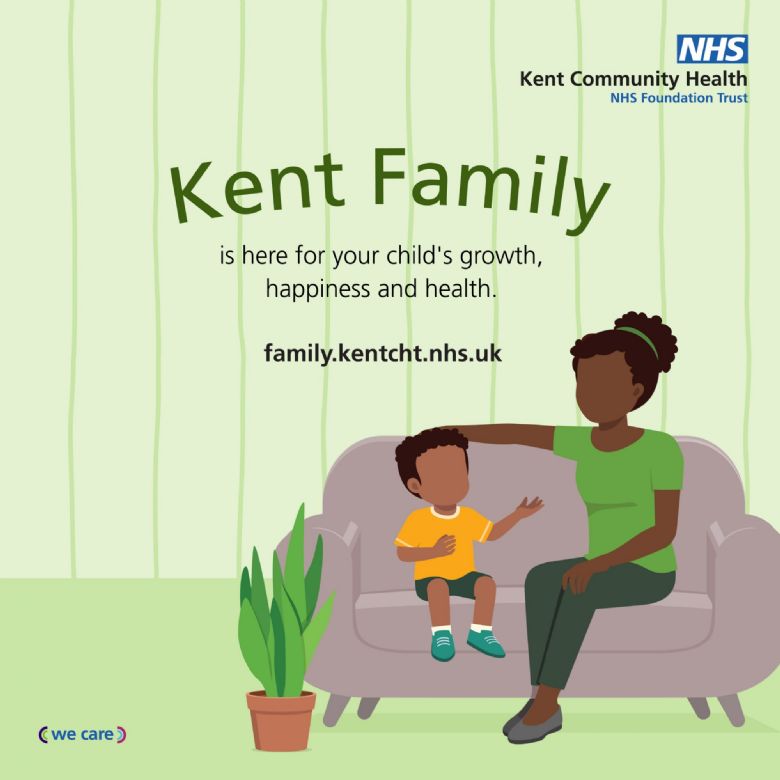
Kent Family Website
Parents, carers and loved ones can find support and answers to common questions on the Kent Family website. It brings together trusted information and advice for families before and after birth, through childhood and up to age 19.